


Live Webinar
JUNE 10 | 12:00 PM PT
How I Personalize Sepsis Resuscitation in 2026
ANDROMEDA-SHOCK-2 has been called the 'trial of the decade' for personalized resuscitation in sepsis, but has it really changed anything?
Join the PI of ANDROMEDA-SHOCK-2, ANDROMEDA-VExUS, and international sepsis resuscitation researchers and educators as they discuss, debate, and unpack what it means to personalize sepsis care in 2026 and beyond.
THE PANELISTS

Ross Prager, MD
Moderator, Intensivist
Intensivist at London Health Sciences Centre and Assistant Professor at Western University. PI of ANDROMEDA-VExUS, an international cohort study of venous congestion in septic shock, and a coauthor of the Wang meta-analysis.
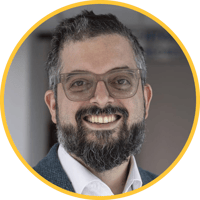
Eduardo Kattan, MD
Intensivist
Intensivist and Assistant Professor in the Department of Critical Care Medicine at Pontificia Universidad Católica de Chile, where his research focuses on capillary refill time, hemodynamic phenotyping, and personalized resuscitation in septic shock.

John Basmaji, MD
Intensivist
Intensivist at London Health Sciences Centre and Assistant Professor of Critical Care at Western University. His research focuses on POCUS in shock and evidence synthesis methodology; he led the 2025 GRADE meta-analysis of dynamic fluid-responsiveness measures in sepsis.

Katie Wiskar, MD
General Internist
Academic general internist at Vancouver General Hospital and lead of UBC's General Internal Medicine POCUS fellowship. Internationally recognized educator focused on whole-body ultrasound for volume assessment, advanced bedside echocardiography, and solid-organ Doppler for venous congestion.
WHAT WILL BE DISCUSSED
What ANDROMEDA-SHOCK-2 actually showed, and what it should change at the bedside
How to balance fluid responsiveness with fluid tolerance before the next bolus
Where venous Doppler (VExUS) and POCUS fit in a personalized resuscitation workflow
What the evidence really says about dynamic measures of fluid responsiveness in sepsis